Structure
Сommand
| Position | Full Name | Military Rank |
|---|---|---|
| Commandant | Oleksii SІROSHTAN | Colonel |
| Deputy Commandant | Ihor SHPYRKO | Colonel |
| Chief of Staff | Dmytro MUZYCHENKO | Colonel |
| Deputy Commandant, Academics | Anatolii LOISHYN | Colonel |
| Deputy Commandant, Research | Maksym BILAN | Colonel |
| Deputy Commandant, Personnel Psychological Support | Ivanna CHOBIT | Lieutenant Colonel |
| Logistics Commandant | Volodymyr ORLIANSKYI | Colonel |
| Sergeant Major of the Military Institute | Maksym POPOV | Master Sergeant |
Faculty of Military Psychology and Social Work
Department of Military Psychology and Pedagogy
In order to improve professional competencies, graduates of the first (bachelor’s) and second (master’s) levels of higher education in the specialty C4 “Psychology” are systematically involved in the processes of reintegration of servicemembers released from captivity by the Russian aggressor; in the processes of providing psychological support to military personnel and their family members at rehabilitation centers; and in carrying out psychological support activities for personnel during the performance of assigned tasks.
The academic staff of the department has developed an online course “Specifics of the Work of a Psychological Officer in Combat Conditions” on the PROMETHEUS platform. Within the framework of international cooperation, students have the opportunity to attend guest lectures and training sessions delivered by renowned foreign experts in the field of psychology: Professor of Psychology at the University of Miami (USA), neuroscientist, PhD Amishi JHA; military psychologist of the Institute of Military Psychiatry, University of Oslo (Norway), Trond Ivar HEGGØ; international trainer of "Mindfulness Based Attention Training", Volodymyr PASHKOVSKYI, and others. Since 2019, cadets of the specialty C4 “Psychology” have been participating in the non-commercial Erasmus program of the European Union for student and faculty exchange among universities of EU member states.
Department of Social Work and Military Chaplaincy
The main tasks of future officers specializing in “Social Work” will include organizing and conducting social support activities, ensuring the implementation of the social rights and guarantees of servicemembers, their family members, and employees of the Armed Forces of Ukraine; cooperating with representatives of territorial recruitment and social support centers, governmental authorities, and local self-government bodies on matters of providing targeted social assistance to servicemembers who require additional social protection, to their families, and to the families of servicemembers who have been killed, taken prisoner, or gone missing.
The main efforts of the academic staff of the department are focused on:
- Implementing NATO standards in the educational process;
- Developing the ability to apply in practice the fundamental principles of social work theory in the military, including according to NATO Social Services principles;
- Preparing future officers capable of personally providing social support to servicemembers and their families both in peacetime and during the enforcement of martial law;
- Ensuring that students acquire the knowledge necessary to understand the processes of planning, preparing, and implementing management decisions regarding social support, taking into account international standards and Euro-Atlantic procedures.
Department of Military Political Science
The knowledge acquired by graduates of the department ensures a deep understanding of the political aspects of military affairs, contributes to the development of effective strategies, and supports informed decision-making. By applying military political science, military leaders can better navigate complex political situations, anticipate future threats, and ensure the reliable defense of the state.
To transfer combat experience to students, the academic staff of the department continuously participate in activities related to ensuring national security and defense, repelling and deterring the armed aggression of the Russian Federation.
Since 2019, the academic staff of the department and cadets of the “Political Science” specialty have been participating in the Erasmus+ programme, which facilitates student and staff exchange among universities of the European Union.
Since 2023, the academic staff of the department and cadets of the “Political Science” specialty have been participating in the NATO DEEP programme, aimed at strengthening the military education systems of the Alliance’s partner countries, raising military education standards through curriculum reform, implementing modern teaching methods, and supporting the professional development of the teaching staff.
Faculty of International Relations and Law
Department of International Relations
The department trains military specialists at the tactical level in the specialty “International Relations” under two specializations:
- International Relations in the Military Sphere
- International Cooperation in the Field of Defense and the Military Sphere
Military-professional and military-specialized training is organized at the Military Institute, where cadets acquire theoretical military knowledge and develop practical skills needed to perform duties in entry-level positions within military command authorities, military units, institutions, and organizations of the Armed Forces of Ukraine.
Graduates of the department serve in positions as officers of information-analytical units, information technology units, and international cooperation units within military command structures, military units, institutions, and organizations of the Armed Forces of Ukraine.
Department of Military Translation
Today, the department is the only unit within the Armed Forces of Ukraine that trains military specialists at the tactical level with higher education in the specialty V11 “Philology,” specializing in “Military Translation.” Cadets study English, German, and French. The department provides training in:
Cadets undergo military practice and internships in the departments of the Ministry of Defense of Ukraine and directorates of the General Staff of the Armed Forces of Ukraine that engage in international cooperation with the respective military institutions of NATO member states, partner countries, and international organizations in military-political, military-technical, military, and other areas.
In addition, cadets majoring in V11 “Philology” perform urgent and unscheduled practical tasks related to linguistic support for international cooperation activities conducted by other components of Ukraine’s security and defense sector.
Department of Military Law
The main task of the department is the training of officers at the tactical level in the field of D8 “Law”.
Representatives of the Military Law Enforcement Service of the Armed Forces of Ukraine, the Central Department of Civil-Military Cooperation of the General Staff of the Armed Forces of Ukraine, the legal service of the Armed Forces of Ukraine, as well as volunteers and public organizations of Ukraine, delegations of the International Committee of the Red Cross, the Danish Refugee Council in Ukraine, the UN Human Rights Monitoring Mission, the Center for Civilian Protection in Armed Conflicts, the Coordination Center for Legal Aid Provision, the Regional Human Rights Center, and others are involved in the educational process.
Faculty of Logistics and Journalism
Department of Financial Support of the Troops
The department trains specialists in the following specialties:
- D1 Accounting and Taxation
- D2 Finance, Banking, Insurance, and the Stock Market
Specialist training in both specialties is carried out for the financial bodies of the Armed Forces of Ukraine and other military formations of Ukraine. In addition, the department conducts numerous professional development courses for financial specialists of both existing military units and those newly established after the full-scale invasion of the Russian Federation into the territory of Ukraine.
Department of Geospatial Supply
Currently, the Department of Geospatial Supply (GS) trains military specialists in the specialty “Geodesy and Land Management,” with a specialization in “Geoinformation Systems and Technologies” (GIS), under the educational program “Geoinformation Systems and Technologies.”
The training infrastructure for military specialists is implemented through the integration of resources from the Military Institute, faculties of the Taras Shevchenko National University of Kyiv, and military units of the Armed Forces of Ukraine.
Department of Military Journalism
The department includes a training and practice complex — a modern television and radio studio equipped with high-quality hardware and technology for conducting practical classes with cadet journalists. The training and practice complex is outfitted with studio-grade video cameras, a video teleprompter, lighting, and a designated filming area, as well as a control panel, a recording studio, and all necessary computer software for editing and processing photos, videos, and audio. The complex allows a team of ten cadets to work simultaneously — professionally recording sound and music, conducting video shoots, and editing materials in parallel. The complex also includes portable equipment for field mobile filming at various locations.
Faculty of Professional Military and Postgraduate Education
Department of General Military Training
The department is a modern academic unit capable of implementing and applying advanced training technologies, methods, and practices for the preparation and employment of units based on the combat experience of the Armed Forces of Ukraine, aimed at training officers at the tactical level.
Material and Technical Base
- Shooting range for conducting practical firearms training
- Combat support classroom enabling the study of modern communication systems and engineering munitions
- “STEEL BEASTS” modern armored combat tactics simulation classroom, which enables the creation of computerized virtual simulations of armored and mechanized combat with an emphasis on the employment of small units. It models all tactical levels up to several reinforced companies
- LASERTAG hardware and software system for training servicemembers in practicing tactical actions across main types of combat
- Airsoft equipment for training servicemembers in practicing tactical actions across main types of combat
Department of Management and Routine Unit Activities
The department provides theoretical and practical training in military management based on modern management models and combat experience for tactical-level officers, as well as the study of routine unit management.
Key objectives of the department:
- to develop in future officers the ability to apply management theory, decision-making algorithms, and principles of effective unit leadership, including NATO standards;
- to train officers capable of independently conducting combat training sessions, handling classified documents, ensuring the storage of weapons and ammunition, maintaining safety measures, and keeping the unit in constant readiness for missions in both peacetime and wartime;
- to prepare cadets capable of applying knowledge in planning, preparation, conduct, and support of combined arms unit (tactical group) operations to make informed decisions and issue orders in accordance with international standards and NATO procedures (MDMP).
Department of Military Leadership
The department is intended for conducting educational activities in the military professional training of learners, as well as participating in scientific activities aimed at ensuring the formation of military leaders in accordance with NATO principles and standards during the educational process at the tactical level of professional military education (L-1) for cadets (students) of the Military Institute.
The main tasks of the department include:
- forming a new style of military leadership and leadership behavior;
- forming and developing the personal competencies of the military leader;
- shaping the professional culture of the military leader based on Euro-Atlantic principles and national historical traditions;
- developing knowledge in the context of the philosophy of war, the history of wars, and the art of warfare;
- implementing the experience of military leadership gained during the armed aggression of the Russian Federation against Ukraine;
- developing logical thinking, analytical abilities, and understanding philosophy as a fundamental science, including the philosophy of war;
- forming a culture of perception, reproduction, and dissemination of information.
Department of Physical Training and Sports
Over the years of the department’s existence, its specialists have trained a number of high-level athletes, including: 2 Masters of Sport of International Class, more than 25 Masters of Sport of Ukraine (in kettlebell lifting, modern military pentathlon, polyathlon, boxing, military-sport all-around, etc.), and over 100 Candidates for Master of Sport of Ukraine. The Military Institute’s teams have repeatedly become champions and prize winners in competitions among higher military educational institutions in various sports.
Department of Special Language Training
As a result of the reorganization of the Department of Military Translation and Special Language Training at the end of 2018, and with the aim of optimizing the study of English by cadets of non-linguistic specialties, the Department of Special Language Training (the supporting department) was established.
Main objectives
- Organization and execution of educational, methodological, and scientific activities to ensure the instruction of English to cadets of non-linguistic specialties who are pursuing educational and professional programs for specialists with higher education degrees (Bachelor and Master) in relevant specialties.
- Conducting language testing and issuing a certificate in accordance with the NATO STANAG 6001 standard for the purpose of determining the level of cadets' skills and abilities in the four basic language activities, namely: listening, speaking, reading, and writing.
Department of Automotive Training
Since 1994, the Department of Automotive Training has been providing future officers of all specialties at the institute with the theoretical and practical knowledge for the proficient operation of various types of vehicles.
The main efforts of the Department's academic staff are directed towards:
- Training cadets in the construction and operation of military automotive equipment, including the use of modern multimedia simulators;
- Acquiring knowledge of traffic rules, fundamentals of car driving and road safety, and providing first aid;
- Providing instructor assistance while acquiring practical driving skills in various terrain conditions, seasons, and times of day, as well as training to overcome natural and artificial obstacles using various types of automotive equipment;
- Acquiring car driving skills up to the level required for driver qualification categories 'B' and 'C';
- Acquiring knowledge of the general construction, operational procedures and rules, as well as the combat capabilities of armored vehicles and other automotive equipment;
- Enabling cadets to improve theoretical knowledge in specialized classrooms for studying traffic rules and the construction of main types of military equipment.
Self-Governance
Sergeant's Council
The Sergeant's Council is a collegiate advisory body established to review the results of the evaluation of sergeant personnel (servicemen), conduct a comprehensive assessment of their business, moral, professional, and individual qualities, determine their suitability for the positions they hold, and assess the prospects for their future service utilization.
Main objectives of the Sergeant's Council:
- Identification of candidates for training in the multi-level Sergeant Training System courses, including those abroad, and for admission to higher military educational institutions;
- Review of candidates for appointment to sergeant and officer positions;
- Reviewing issues related to sergeants' military service, career planning, enhancing professional competence, and experience acquisition;
- Reviewing the results of the sergeants' annual certification (evaluation) and resolving issues concerning their further service assignment;
- Reviewing problematic issues regarding the functioning of the sergeant corps, seeking ways to resolve them, and developing proposals to increase the effectiveness of sergeant personnel activities;
- Reviewing instances of incomplete or ineffective performance of functional duties by sergeants, or their insufficient professional competence and individual preparedness;
- Reviewing issues of adherence to military discipline, moral and ethical behavior, and the military ETHOS of the sergeant and non-commissioned officer corps of the Armed Forces of Ukraine by enlisted and sergeant personnel;
- Carrying out work to support and multiply the traditions of the sergeant corps, and to protect the honor, dignity, constitutional rights, and freedoms of enlisted and sergeant personnel.
Cadet Council
In accordance with current regulatory and legal documents, and with the aim of combining unity of command with the collegiate development of the most important decisions in the Military Institute, the Cadet Council has been established. The purpose of the Council is to ensure cadets fulfill their duties, protect their rights, promote the harmonious development of the cadet's personality, and foster the skills of a future leader in them.
Main objectives of the Cadet Council
- Promotion of cadets' educational, scientific, and creative activities;
- Assistance in creating the necessary conditions for cadets' accommodation and rest;
- Creation of various cadet groups, societies, associations, and clubs based on interests;
- Organization of cooperation with cadets from other higher educational institutions and patriotic youth organizations;
- Assistance to commanders (superiors) in strengthening cadets' military discipline, and prompt response to violations;
- Participation in providing suggestions for the encouragement (rewarding) of the best cadets;
- Involvement of cadets in amateur artistic activities (amateur performance/arts);
- Coordination of work with commanders (superiors), academic staff, and mentors (curators) of study groups;
- In cooperation with officers of the cadet units, creating conditions for cadets' independent preparation (study), rest, and leisure;
- Promotion of a healthy lifestyle, prevention of illegal actions by cadets, and the consumption of alcoholic beverages and narcotic substances.
PRIMI INTER PARES
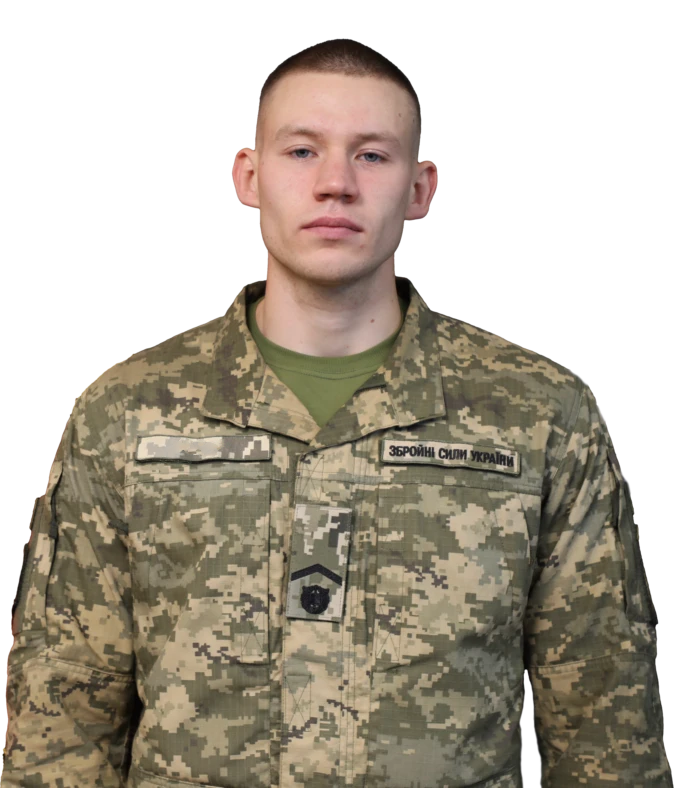
Danylo
Danylo is a fourth-year cadet at the Faculty of Support and Journalism, specializing in "Accounting and Taxation," holding the rank of Senior Soldier.
Danylo is a member of the Military Institute's kettlebell lifting team, a gold medalist in the Military Institute's kettlebell lifting championship, and a silver medalist in both the Armed Forces of Ukraine Championship and the Kyiv Championship.
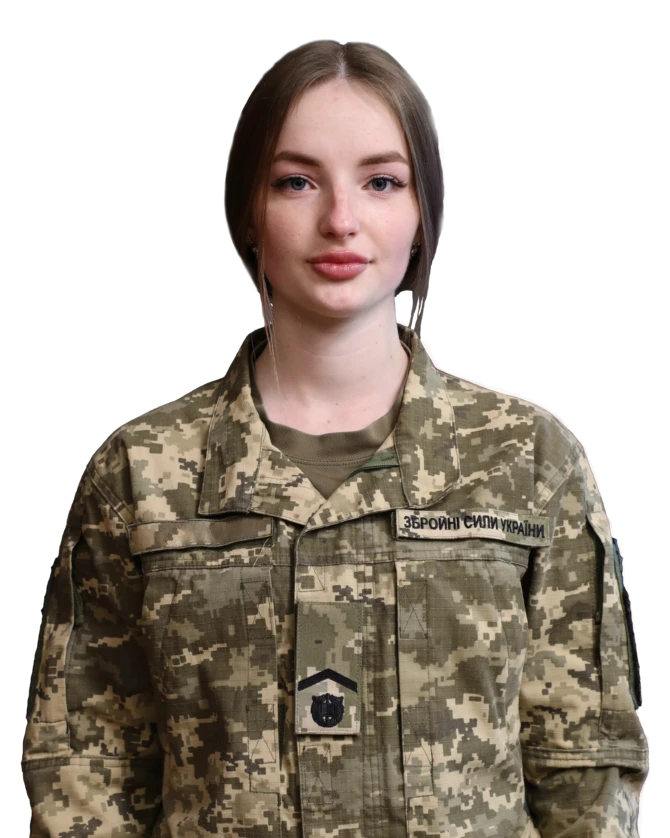
Yana
Yana is a third-year cadet at the Faculty of Support and Journalism, specializing in "Finance, Banking, Insurance, and the Stock Market," holding the rank of Senior Soldier.
Yana is a member of the "Odna Krov" (One Blood) Public Organization, a representative of the Cadet Council, and is engaged in scientific activities within her specialty. She has excellent academic performance and is actively involved in the life of the Military Institute.
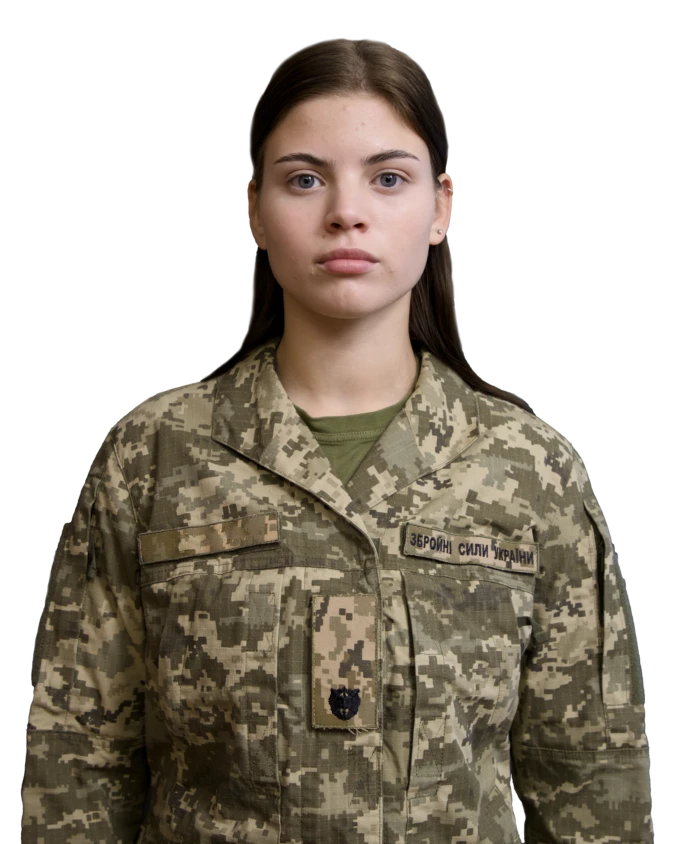
Ivanna
Ivanna is a second-year cadet at the Faculty of Support and Journalism, specializing in "Finance, Banking, Insurance, and the Stock Market," holding the rank of Soldier.
Ivanna is an active participant in the events and activities of the Military Institute, and an athlete: she took part in kettlebell lifting competitions and participated in a running race in honor of the memory of the Heroes of Ukraine. She is also involved in career guidance work.
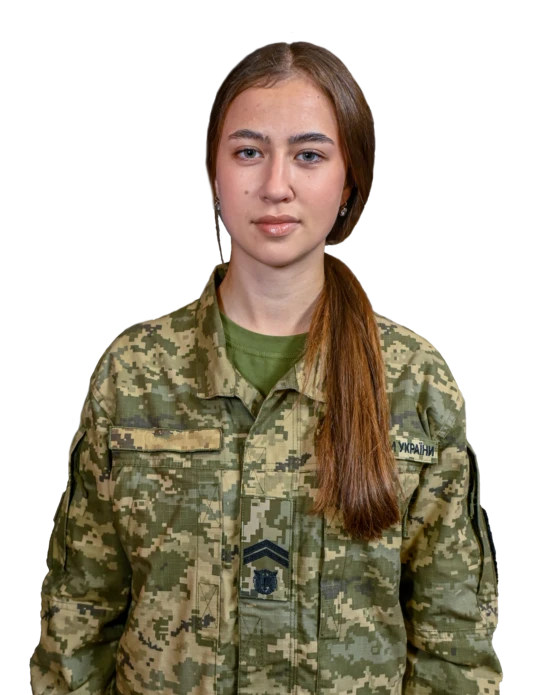
Viktoriia
Viktoriia is a third-year cadet at the Faculty of International Relations and Law, specializing in "International Relations in the Military Sphere," holding the rank of Junior Sergeant. Viktoriia is an active participant in conducting career guidance work in secondary educational institutions. She participated in the XXII International Scientific and Practical Conference "Shevchenko Spring 2024" and the XIV International Scientific Conference "Days of Science – 2024."
She is a two-time Ukrainian Volleyball Champion. She holds the First Senior Rank in Volleyball and is the captain of the faculty's women's team.
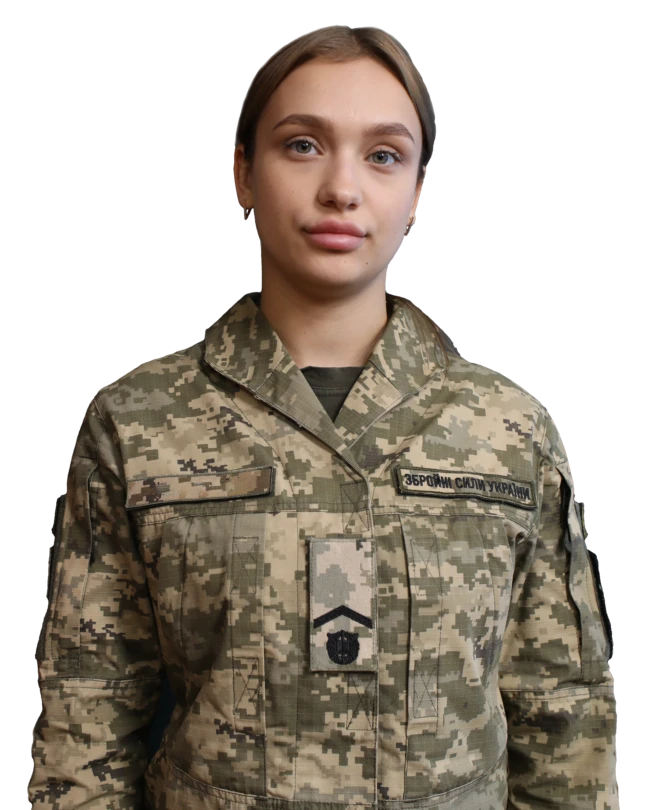
Marharyta
Marharyta is a third-year cadet at the Faculty of Military Psychology and Social Work, specializing in "Military Psychology," holding the rank of Senior Soldier.
Marharyta is the Head of the Social Department of the Military Institute's Cadet Council, a member of the Academic Council of the Military Institute, a member of the commission for conferring honorary titles of the Military Institute, and a participant in scientific conferences on psychology. She also has published scientific papers and abstracts in international publishing collections.
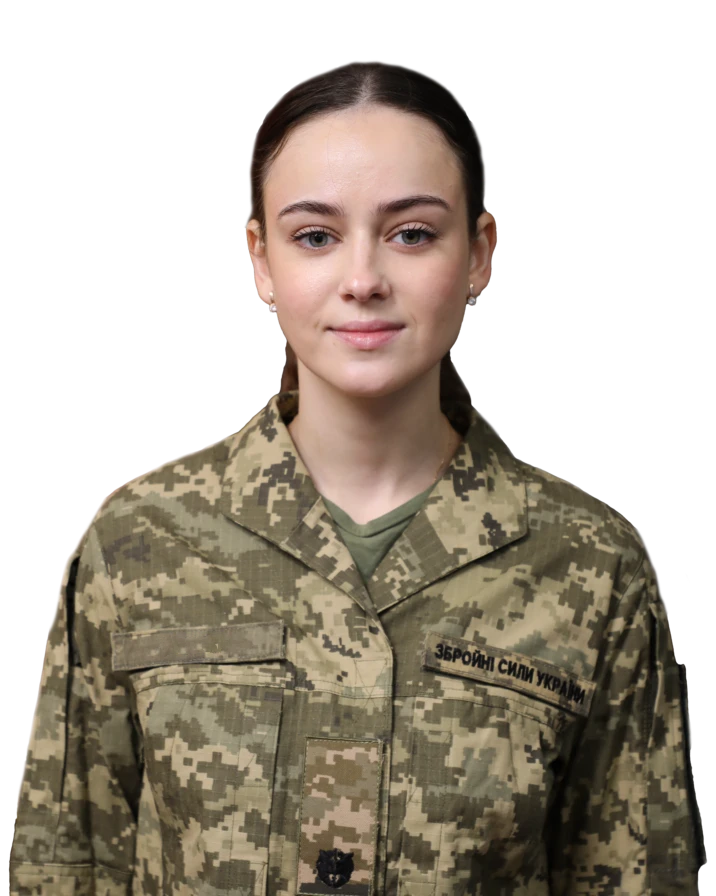
Liliana
Liliana is a second-year cadet at the Faculty of Military Psychology and Social Work, specializing in "Military Psychology," holding the rank of Soldier.
Liliana is a member of the Military Institute's Military Scientific Society, actively participates in scientific conferences on psychology, is engaged in volunteering activities, and has published scientific abstracts in international publishing collections.
Insignia
According to the "Methodological Guidelines on Specific Issues of Development and Implementation of Military Symbolism in the Armed Forces of Ukraine," higher military educational institutions (HMEIs) falling under the competence of the Ministry of Defence of Ukraine and the General Staff of the Armed Forces of Ukraine must use sleeve emblems in the form of "Spanish" shields (with a rounded lower part).
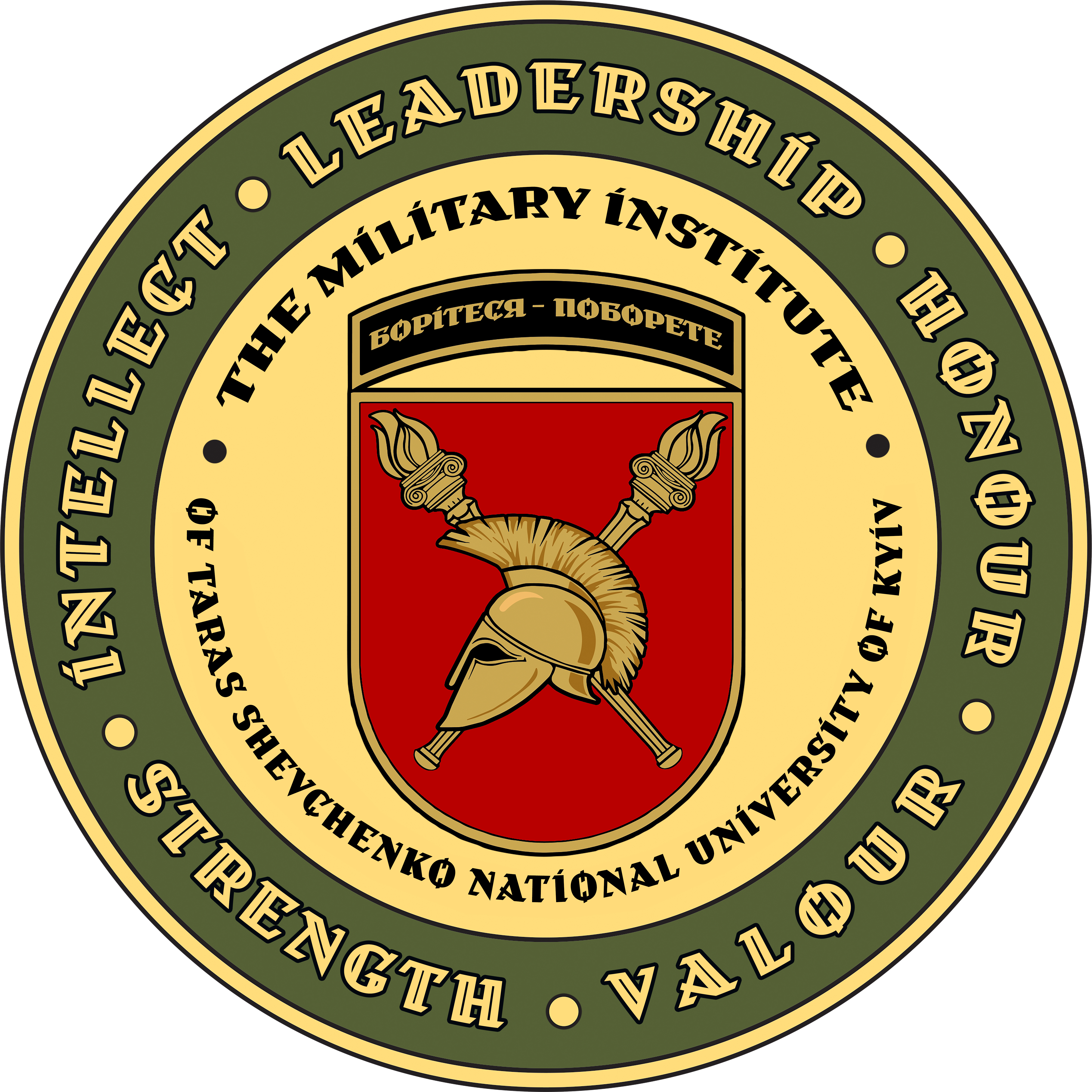
The symbolism of the sleeve insignia is based on the ancient helmet as an attribute of the ancient gods of war, science, strategy, and military art: Ares (Mars), Athena (Minerva), and Enyo (Bellona).
The torches are symbols of the "light of knowledge" and excellence in science. According to the Orders of the Minister of Defence of Ukraine 606 and 370 the element on the collar insignia for cadets of higher educational institutions of the Armed Forces of Ukraine is crossed torches. The color scheme is based on the color palette of the so-called Red University Building (Chervonyi Korpus) of Taras Shevchenko National University of Kyiv, of which the Military Institute is a part.
Development Strategy
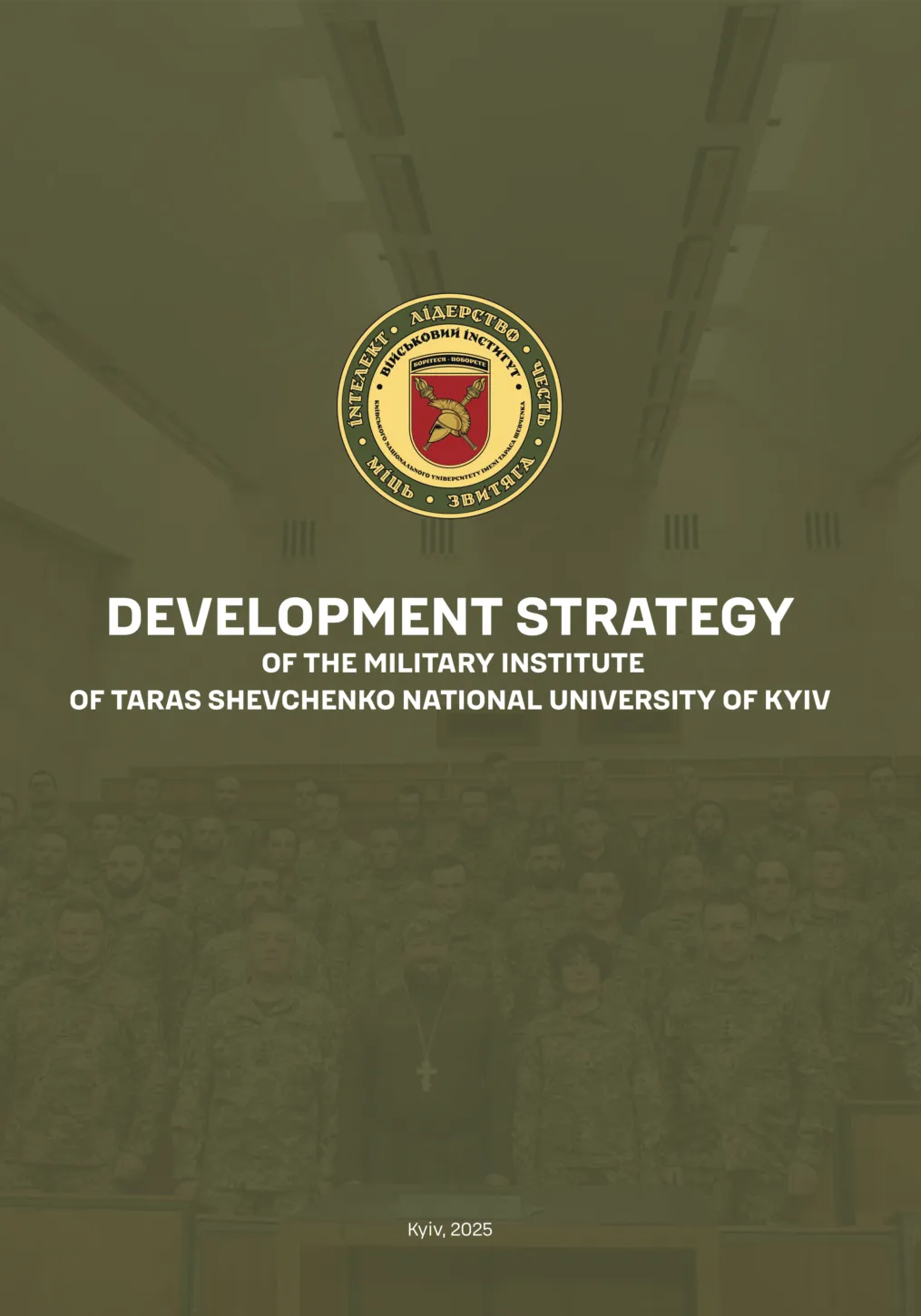
The Institute's Development Strategy and the associated Operational Plan for its implementation determine the course for the future, establishing priorities and focusing on the Institute's development and the new formation of military leaders. The priority for achieving strategic goals is building up the Institute's capabilities, which are based on knowledge, skills, values, experience, integrity, as well as training methodologies, taking into account the best practices of the world's leading countries.
Concept of Innovation Activity
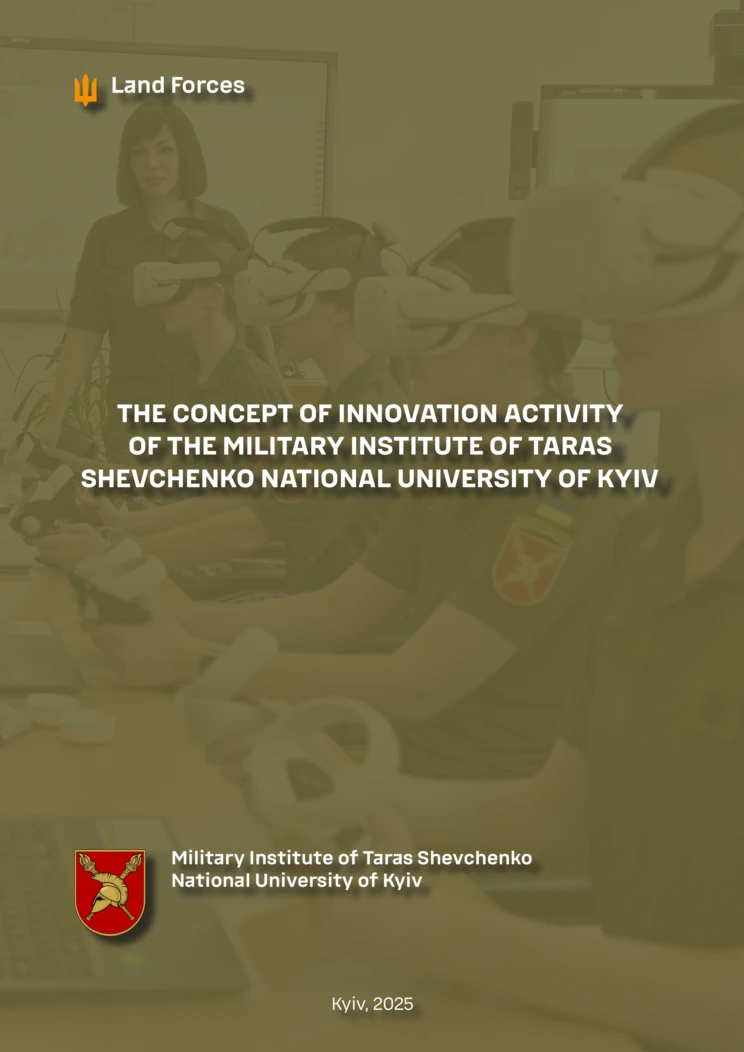
The Concept envisages the formation of a holistic innovative ecosystem at the Military Institute, capable of ensuring the development of military education, science, and the improvement of activities based on the best domestic and international practices, taking into account the acquired unique military experience, NATO standards, as well as contemporary challenges and threats.
Leadership Concept
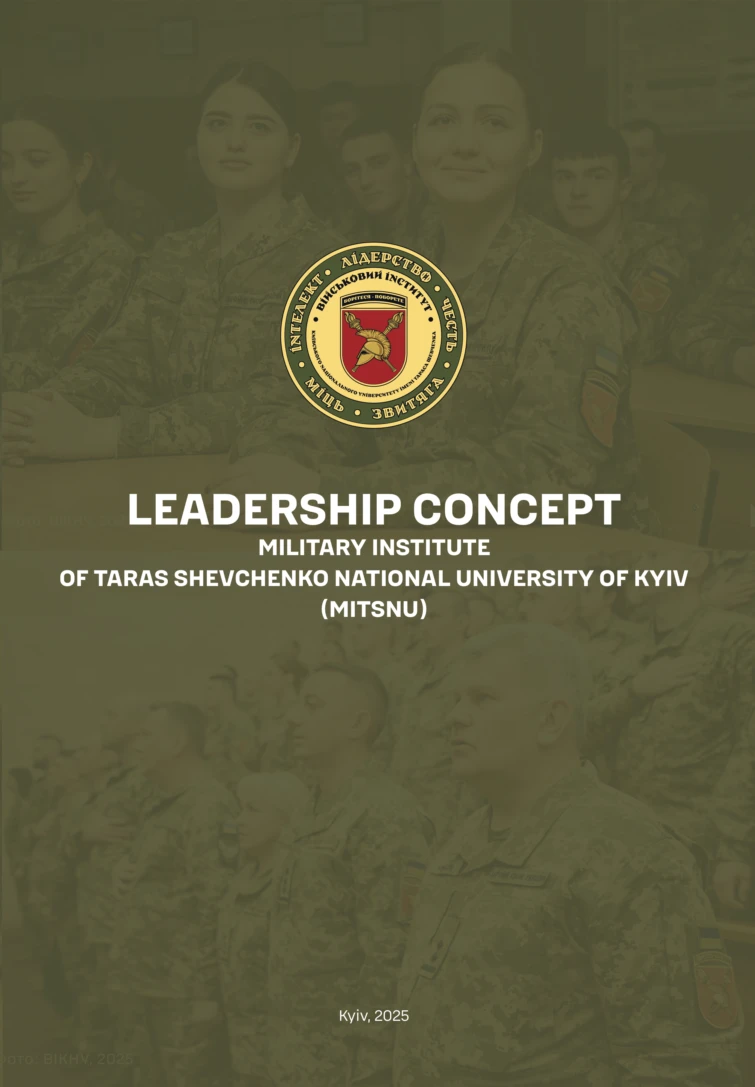
The Concept is a document that defines the directions for the formation of leadership competencies at all levels of the Military Institute's functioning, aimed at the development of the military leader by providing a wide range of professional (specialized) knowledge and fostering intellectual agility: critical, creative, and rational thinking, as well as the ability to make decisions based on ethical norms.
International Cooperation
The main objectives of the international cooperation of the Military Institute of Taras Shevchenko National University of Kyiv are:
- Linguistic support for the training of military personnel of the Armed Forces of Ukraine under the Operation Interflex program.
- Participation in the NATO Defense Education Enhancement Program (DEEP) with the aim of training scientific and pedagogical staff and improving curricula for the training of military specialists.
- Participation in the Erasmus+ programs.
✢
IN SCUTO
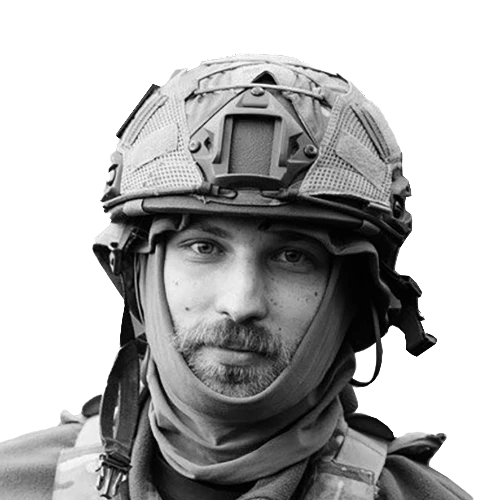
Bohdan Borodai
13.03.1997 – 01.02.2024
He was a Soldier, operator of the mortar battery control section, 5th Separate Assault Brigade (24th Separate Assault Battalion "Aidar"). He studied International Relations. He was killed on February 1, 2024, during a mortar shelling in the area of Bakhmut, Donetsk Oblast. He was awarded the Order For Courage, 3rd Class (posthumously).
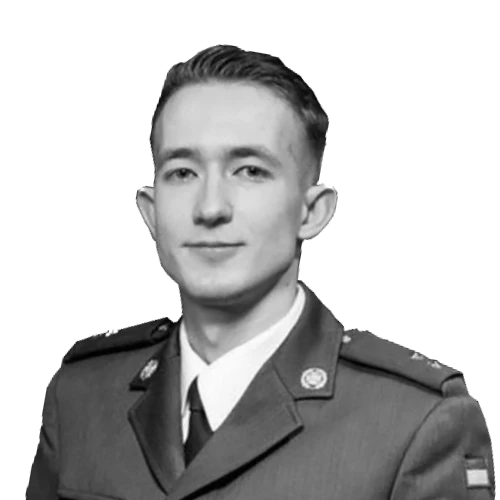
Mykyta Vlaskov
11.06.1998 – 03.11.2023
He was a Captain, officer of the Moral and Psychological Support (MPS) section of the brigade, 128th Separate Mountain Assault Brigade. Graduated in 2020 with a degree in Political Science. He was killed on November 3, 2023, during a missile attack in the area of Zarichne village, Komyshuvakha Territorial Hromada, Zaporizhzhia Raion, Zaporizhzhia Oblast. He was awarded the Order of Bohdan Khmelnytsky, 3rd Class (posthumously).
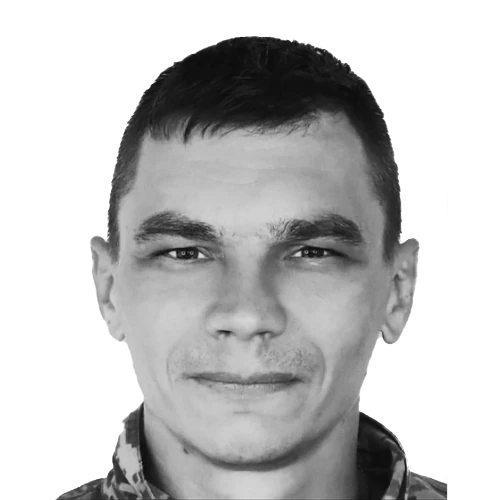
Volodymyr Volodko
16.10.1990 – 06.09.2023
He was a Senior Lieutenant. Graduated in 2019 with a degree in Political Science. He was killed on September 6, 2023, during a mortar shelling in the area of Shakhtarske village, Volnovakha Raion, Donetsk Oblast.
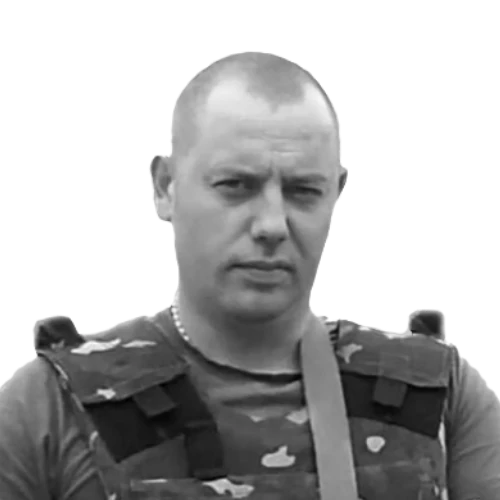
Yevhenii Horyk
07.07.1981 – 02.03.2022
He was a Lieutenant Colonel, an officer of the regime service, Mykolaiv Zonal Department of the Military Law Enforcement Service (VSP). He was killed on March 2, 2022, during a tank shelling in the area of Voznesensk, Mykolaiv Oblast. He was awarded the Order For Courage, 3rd Class (posthumously).
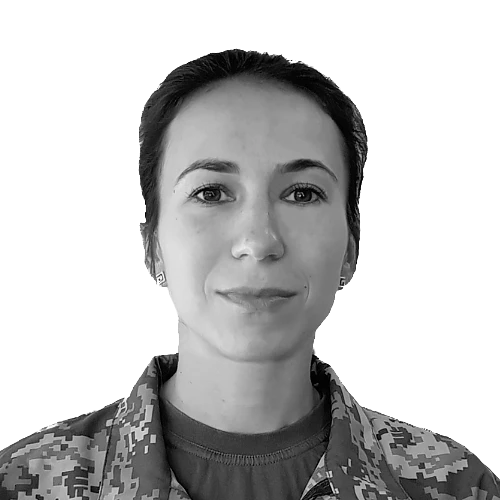
Eleonora Didkovska (Maltseva)
02.04.1989 – 31.07.2023
She was a Lieutenant Colonel, Chief of the Operations Section of the Headquarters, 47th Separate Mechanized Brigade. Graduated in 2011 with a degree in GIS. She was killed on July 31, 2023, during a missile attack in the area of Orikhiv, Zaporizhzhia Oblast. She was awarded the Order of Bohdan Khmelnytsky, 3rd Class (posthumously).
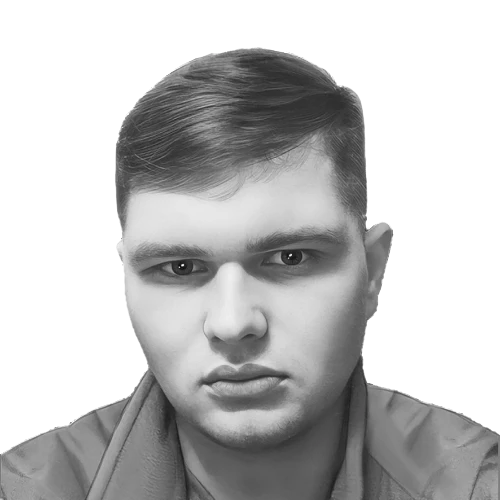
Andrii Zadorozhnyi
06.12.2001 – 26.02.2022
He was a Junior Lieutenant (posthumously), a third-year cadet of the training group 312-ps of the Military Humanitarian and Linguistic Faculty. He was killed on February 26, 2022, while conducting defensive operations in the city of Kyiv.
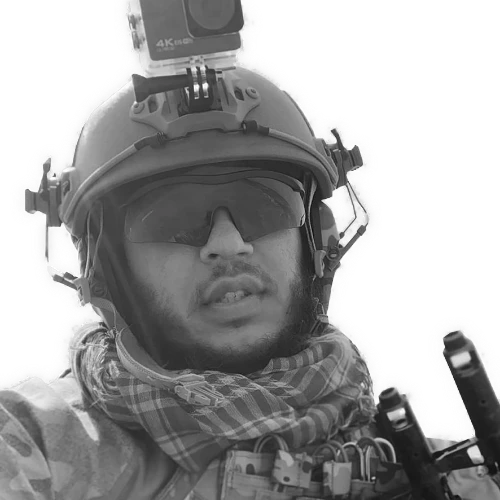
Denys Zelenyi
27.02.1996 – 08.05.2024
He was a Senior Lieutenant, officer of the battalion's operational planning section, 1st Presidential Brigade of Operational Assignment of the National Guard of Ukraine named after Hetman Petro Doroshenko "Bureviy." He was killed on May 8, 2024, during an artillery shelling in the area of Kreminna, Donetsk Oblast.
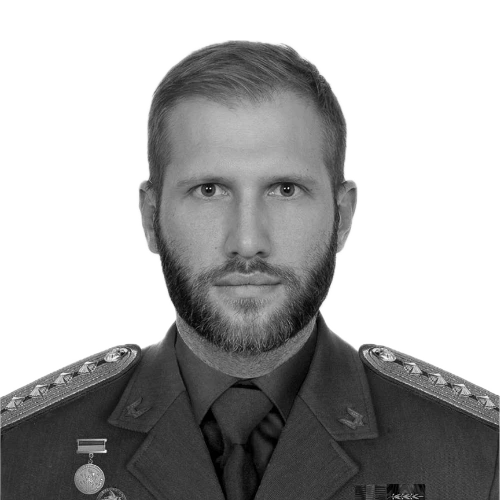
Dmytro Ivashchyshyn
10.01.1997 – 23.05.2026
He was a Captain. He was killed on May 23, 2026, while performing a combat mission in the Donetsk direction, sustaining multiple shrapnel wounds from an enemy FPV drone, having shielded his group at the cost of his own life.
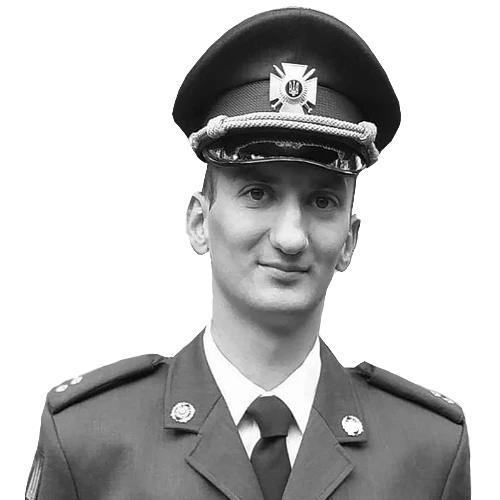
Viktor Leonidovych Kyrhan
12.06.1990 – 12.03.2022
He was a Senior Lieutenant, commander of the reconnaissance platoon, 59th Separate Motorized Infantry Brigade (11th Separate Motorized Infantry Battalion). Graduated in 2020 with a degree in Political Science. He was killed on March 12, 2022, while performing a combat mission for deep reconnaissance in the area of Stepova Dolyna village, Halytsynivska Territorial Hromada, Mykolaiv Raion, Mykolaiv Oblast.

Ivan Kondrashov
20.06.2000 – 30.06.2022
He was a Lieutenant, officer-psychologist of the artillery division, 14th Separate Mechanized Brigade. Graduated in 2021 with a degree in Psychology. He was killed on June 30, 2022, during an artillery shelling in the area of Druzhkivka, Kramatorsk Raion, Donetsk Oblast. He was awarded the Order For Courage, 3rd Class (posthumously).
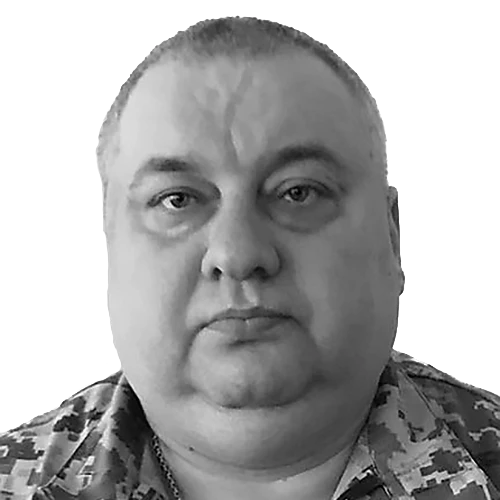
Anatolii Kravchuk
21.10.1974 – 26.02.2022
He was a Colonel, Senior Lecturer at the Department of Automotive Training of the Faculty of Postgraduate Education. He was killed on February 26, 2022, while conducting defensive operations in the city of Kyiv.

Oleksandr Kuznetsov
28.11.1993 – 15.09.2022
He was a Major, Head of the Special Operations Section, Special Operations Forces (SOF) of the Armed Forces of Ukraine. Graduated in 2016 with a degree in "International Information." He was killed on September 15, 2022, while performing a combat mission in the area of Bereznehuvate urban-type settlement, Bashtanka Raion, Mykolaiv Oblast, as a result of a shrapnel wound. He was awarded the Order of Bohdan Khmelnytsky, 3rd Class (posthumously).
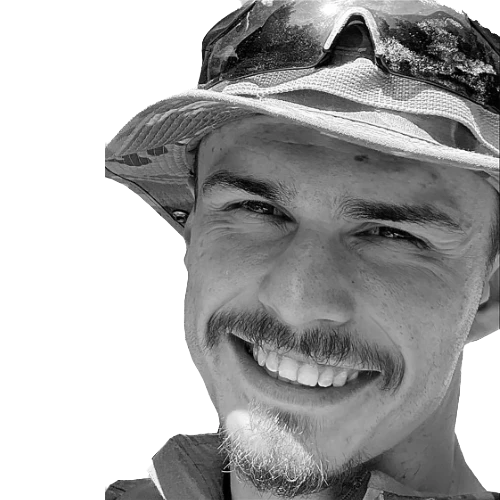
Yehor Lebedenko
16.02.2000 – 11.12.2022
He was a Lieutenant, officer-psychologist of the anti-tank division, 10th Separate Mountain Assault Brigade. Graduated in 2022 with a degree in Psychology. He died on December 11, 2022, from a previously sustained wound at Mechnikov Hospital in Dnipro.
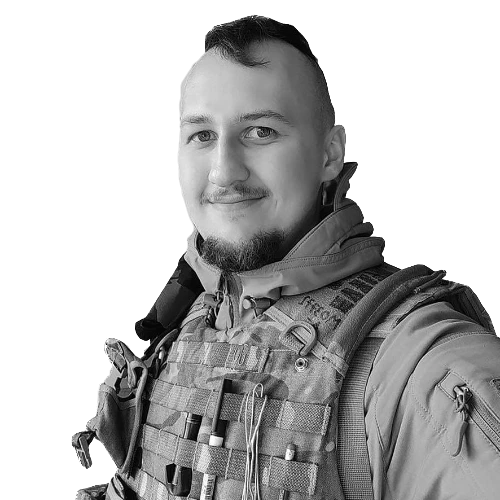
Heorhii Lysenko
27.10.1995 – 07.11.2022
He was a Major, group commander, International Legion of the Defence Intelligence of Ukraine (DIU). Graduated in 2017 with a degree in "International Information." He was killed on November 7, 2022, during an artillery shelling in the area of Bakhmut, Donetsk Oblast. Hero of Ukraine (posthumously).

Ivan Markevych
27.09.1994 – 01.11.2023
He was a Sergeant, aimer (gunner) of the reconnaissance section, 47th Separate Mechanized Brigade. Graduated in 2018 with a degree in Psychology. He was killed on November 1, 2023, while performing a combat mission in the area of Avdiivka, Pokrovsk Raion, Donetsk Oblast.
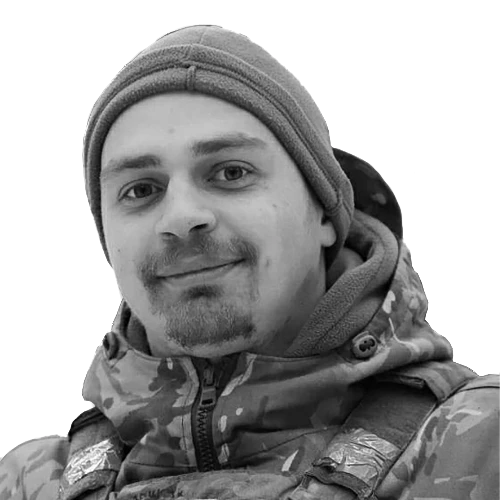
Oleksandr Marchuk
14.01.1998 – 10.06.2023
He was a Captain (posthumously), Deputy Commander of the Tank Company for Moral and Psychological Support, 95th Separate Air Assault Brigade. Graduated in 2019 with a degree in Psychology. He was killed on June 10, 2023, during a mortar shelling in the area of Lyman, Kramatorsk Raion, Donetsk Oblast. He was awarded the Order of Bohdan Khmelnytsky, 3rd Class (posthumously).
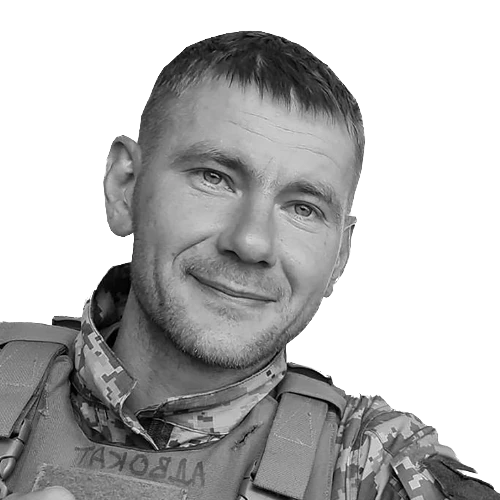
Mykola Moha
10.08.1983 – 16.08.2022
He was a Major of Justice (posthumously), commander of a rifle platoon, 30th Separate Mechanized Brigade. Graduated in 2004 with a degree in Law. He was killed on August 16, 2022, during an artillery shelling in the area of Oleksandrivka village, Izium Raion, Kharkiv Oblast. He was awarded the Order of Bohdan Khmelnytsky, 3rd Class (posthumously).
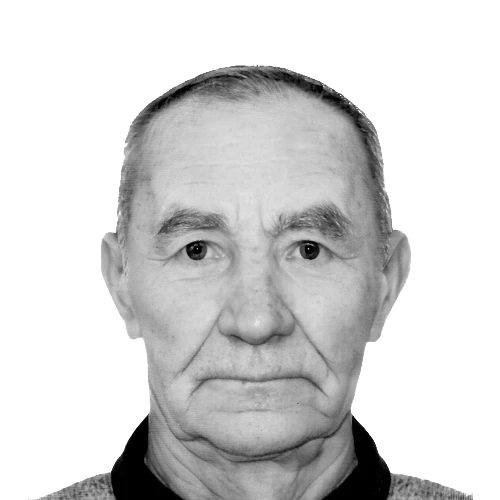
Petro Nedodar
15.05.1950 – 26.02.2022
He was an Employee of the Armed Forces of Ukraine (AFU), a motor vehicle driver at the garage of the Military Institute. He was killed on February 26, 2022, while conducting defensive operations in the city of Kyiv.
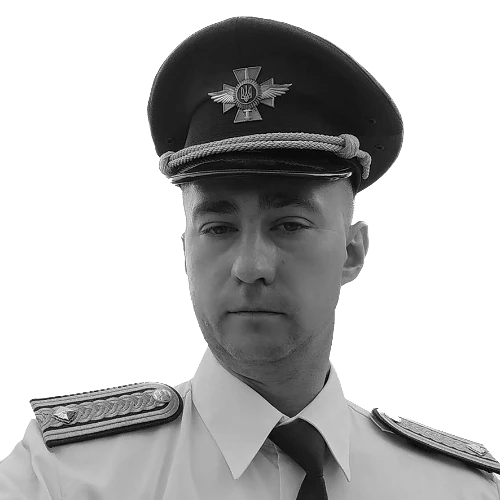
Serhii Oleksiienko
04.10.1987 – 01.03.2022
He was a Major, Deputy Commander of the Battalion for Moral and Psychological Support, 38th Combined Training Center of Kharkiv National University of the Air Force. Graduated in 2009 with a degree in Psychology. He was killed on March 1, 2022, by a sniper's shot in Vasylkiv, Kyiv Oblast. He was awarded the Order For Courage, 3rd Class (posthumously).
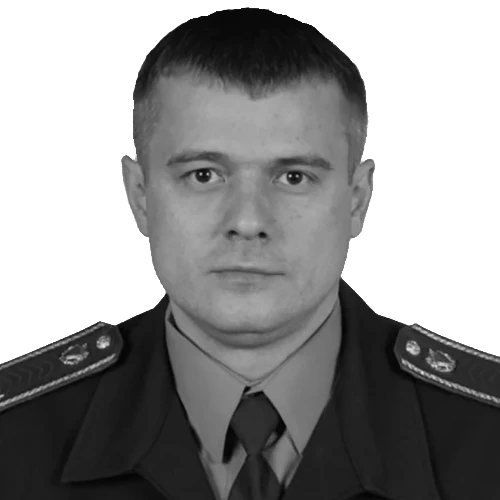
Vitalii Paseka
15.05.1979 – 26.02.2022
He was a Colonel (posthumously), Head of the Information and Analytical Work and Monitoring Department, North-Eastern Territorial Directorate of Internal Audit of the Ministry of Defence of Ukraine (MoD). Graduated in 2002 with a degree in Law. He was killed on February 26, 2022, while performing a combat mission in the area of Novyi Bilous village, Chernihiv Raion, Chernihiv Oblast. He was awarded the Order of Bohdan Khmelnytsky, 3rd Class (posthumously).
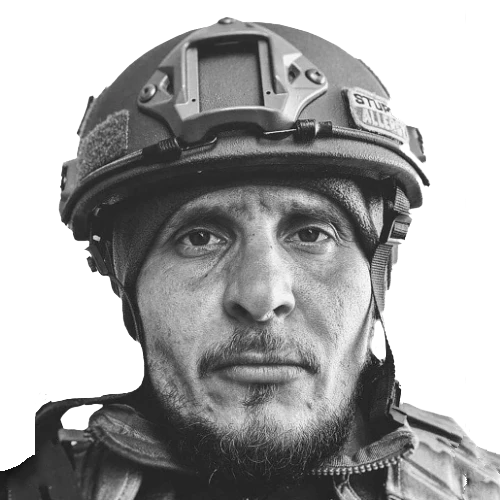
Oleksii Rubtsov
31.05.1982 – 18.09.2022
He was a Senior Lieutenant, commander of the reconnaissance platoon, 58th Separate Motorized Infantry Brigade. Graduated in 2004 with a degree in Law. He was killed on September 18, 2022, in close combat with the enemy in the area of Zaitseve village, Bakhmut Raion, Donetsk Oblast. He was awarded the Order For Courage, 3rd Class.
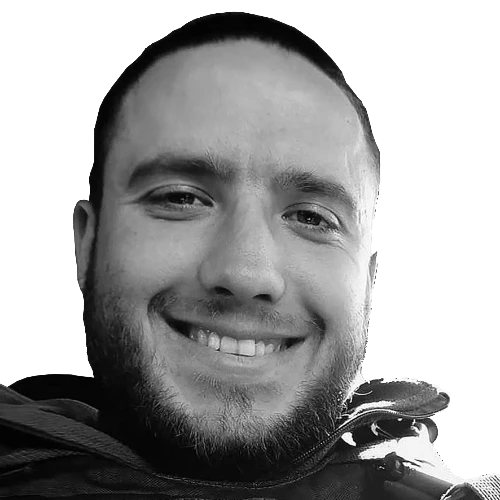
Mykola Smolovyk
24.09.1999 – 05.06.2025
He was a Senior Lieutenant, military psychologist, officer of the 28th Separate Mechanized Brigade. Graduated in 2021 with a degree in Psychology. He was killed on June 5, 2025, while performing a combat mission in the area of Kostiantynivka, Donetsk Oblast.
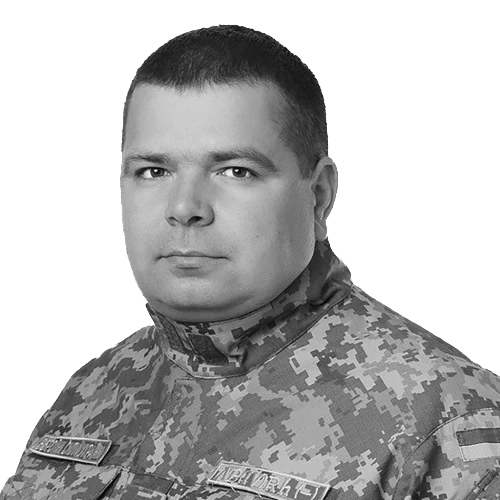
Volodymyr Sukholytkyi
13.08.1976 – 19.11.2022
He was a Colonel, Assistant Brigade Commander for Financial and Economic Work – Chief of Service, 125th Separate Territorial Defense Brigade. Graduated in 1998 with a degree in "Finance." He was killed on November 19, 2022, while performing duty in Lviv.
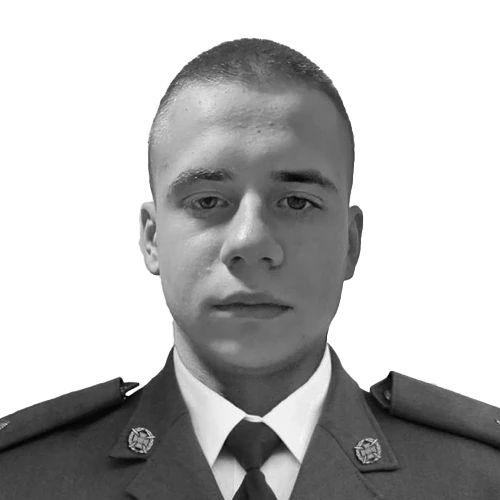
Oleh Turyanskyi
23.06.2004 – 26.02.2022
e was a Junior Lieutenant (posthumously), a first-year cadet of the training group 112-ps of the Military Humanitarian and Linguistic Faculty. He was killed on February 26, 2022, while conducting defensive operations in the city of Kyiv.
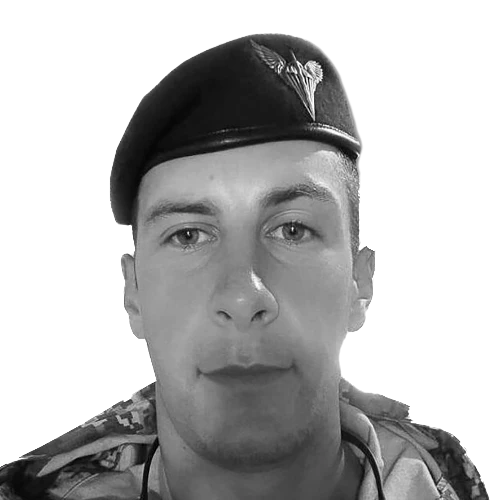
Bohdan Kharytonov
17.01.1993 – 29.09.2022
He was a Captain (posthumously), acting Commander of a company, 80th Separate Air Assault Brigade. Graduated in 2017 with a degree in Psychology. He was killed on September 29, 2022, while performing a combat mission in the area of Vyshche Solone village, Izium Raion, Kharkiv Oblast. He was awarded the Order of Bohdan Khmelnytsky, 3rd Class (posthumously).
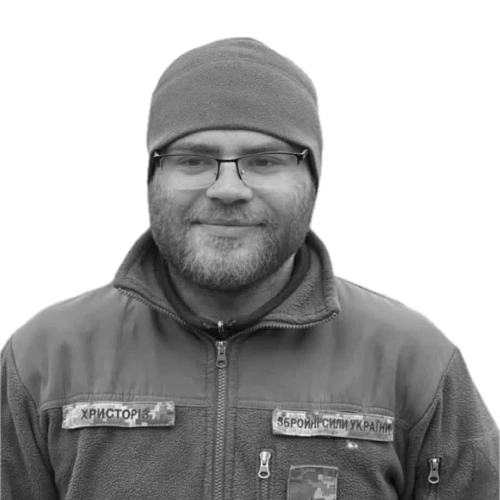
Mykola Khrystoriz
17.02.1995 – 14.07.2025
He was a Captain. He was killed on July 14, 2025, while performing a combat mission in the area of Voskresenka village, Volnovakha Raion, Donetsk Oblast.
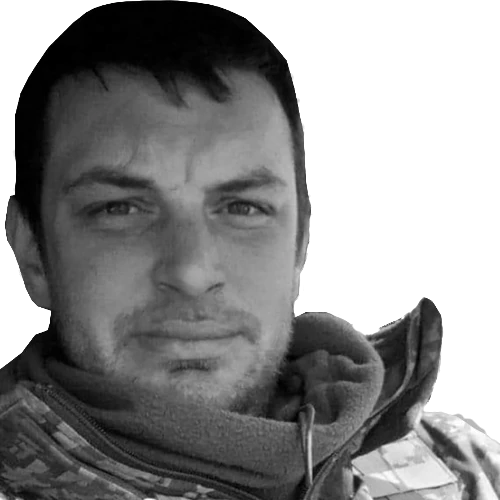
Volodymyr Tsytsiura
20.10.1993 – 29.11.2023
He was a Senior Lieutenant, deputy commandant of the detachment, 15th Mobile Border Guard Detachment. Graduated in 2021 with a degree in GIS. He was killed on November 29, 2023, during a mortar shelling in the area of Hrushivka village, Kupiansk Raion, Kharkiv Oblast..
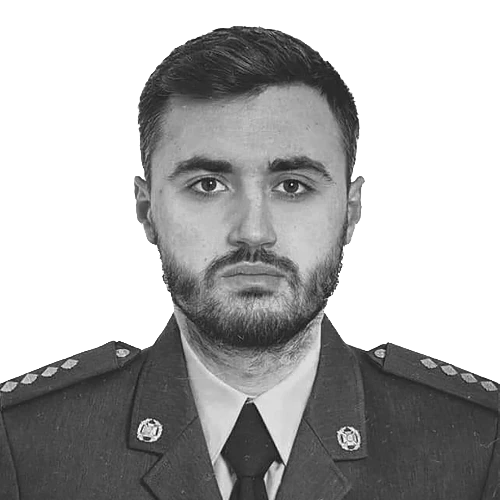
Oleksii Chubashev
16.11.1991 – 10.06.2022
He was a Major (posthumously), group commander, Defence Intelligence of Ukraine (DIU) (International Legion). Graduated in 2015 with a degree in Journalism. He was killed on June 10, 2022, during the battles for Sievierodonetsk, Luhansk Oblast. He was awarded the Order of Bohdan Khmelnytsky, 3rd Class (posthumously).
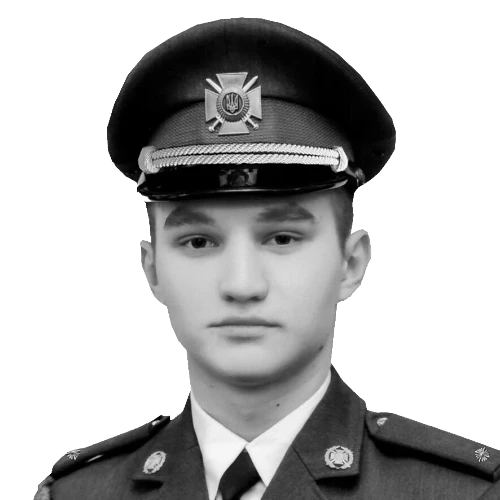
Yan Shevchenko
24.09.2001 – 26.02.2022
He was a Junior Lieutenant (posthumously), a third-year cadet of the training group 311-ps of the Military Humanitarian and Linguistic Faculty. He was killed on February 26, 2022, while conducting defensive operations in the city of Kyiv.
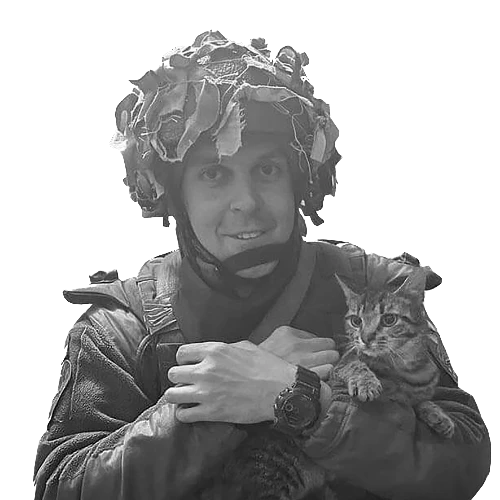
Vladyslav Shynkarenko
14.05.1991 – 26.03.2022
He was a Senior Lieutenant, officer of the brigade's Moral and Psychological Support (MPS) section, 25th Separate Airborne Brigade. Graduated in 2017 with a degree in Psychology. He was killed on March 26, 2022, during the defense of Toretsk, Bakhmut Raion, Donetsk Oblast. He was awarded the Order of Bohdan Khmelnytsky, 3rd Class (posthumously).
Major (posthumously) Oleksii Chubashev, call sign "Rekrut" (Recruit), group commander, Defence Intelligence of Ukraine (DIU) (International Legion). Graduated in 2015 with a degree in Journalism. He was killed on June 10, 2022, during the battles for Sievierodonetsk, Luhansk Oblast. He was awarded the Order of Bohdan Khmelnytsky, 3rd Class (posthumously).
Senior Lieutenant Oleksii Rubtsov, call sign "Soldier," commander of the reconnaissance platoon, 58th Separate Motorized Infantry Brigade. Graduated in 2004 with a degree in Law. He was killed on September 18, 2022, in close combat with the enemy in the area of Zaitseve village, Bakhmut Raion, Donetsk Oblast. He was awarded the Order For Courage, 3rd Class.